Royal Greenwich
Greenwich is becoming a Royal Borough in 2012 when Queen Elizabeth II celebrates her Diamond Jubilee. During the same year it will also be a host borough for the London 2012 Olympic and Paralympic Games.
The award recognises the historically close links forged between Greenwich and the royal family from the Middle Ages to the present day. It also recognises Greenwich's global significance as the home of the Prime Meridian, Greenwich Mean Time and its status as a World Heritage Site.
Greenwich will join the three existing Royal Boroughs - Kensington & Chelsea, Windsor & Maidenhead and Kingston.
Royal Manor
Henry V created the Greenwich royal manor in the 15th century, which was later granted to his half-brother Duke Humphrey of Gloucester. In around 1433 Humphrey enclosed what is now Greenwich Park, the oldest of all the Royal Parks, and built a new riverside house. This was developed by his successors, Henry VI and Henry VII, and renamed the Palace of Placentia or ‘pleasant place’.
Henry VIII was born at Placentia in 1491. A compulsive builder and keen horseman, he made further alterations to the site including a new chapel, stables and a tiltyard with towers and a viewing gallery.
He also stocked Greenwich Park with deer in 1515 and their descendants are still there. Henry VIII married Catherine of Aragon and Anne of Cleves at Greenwich Palace and his daughters, Elizabeth and Mary, were born there. Each went on to rule England as Mary I and Elizabeth I. Stuart Kings and Queens
James I carried out the final remodelling of the palace and re-enclosed the park with a brick wall. The manor was granted to his wife Queen Anne of Denmark, who created a delightful Italianate garden and in 1616 commissioned the Palladian Queen’s House from architect Inigo Jones. After her death in 1619, Charles I granted the manor to his wife Queen Henrietta Maria, for whom Jones completed the Queen’s House around 1638.After the Restoration, Charles II decided to replace the palace with a new classical building and work on the first building, designed by architect James Webb, started in 1664 - it’s now known as King Charles Court and forms
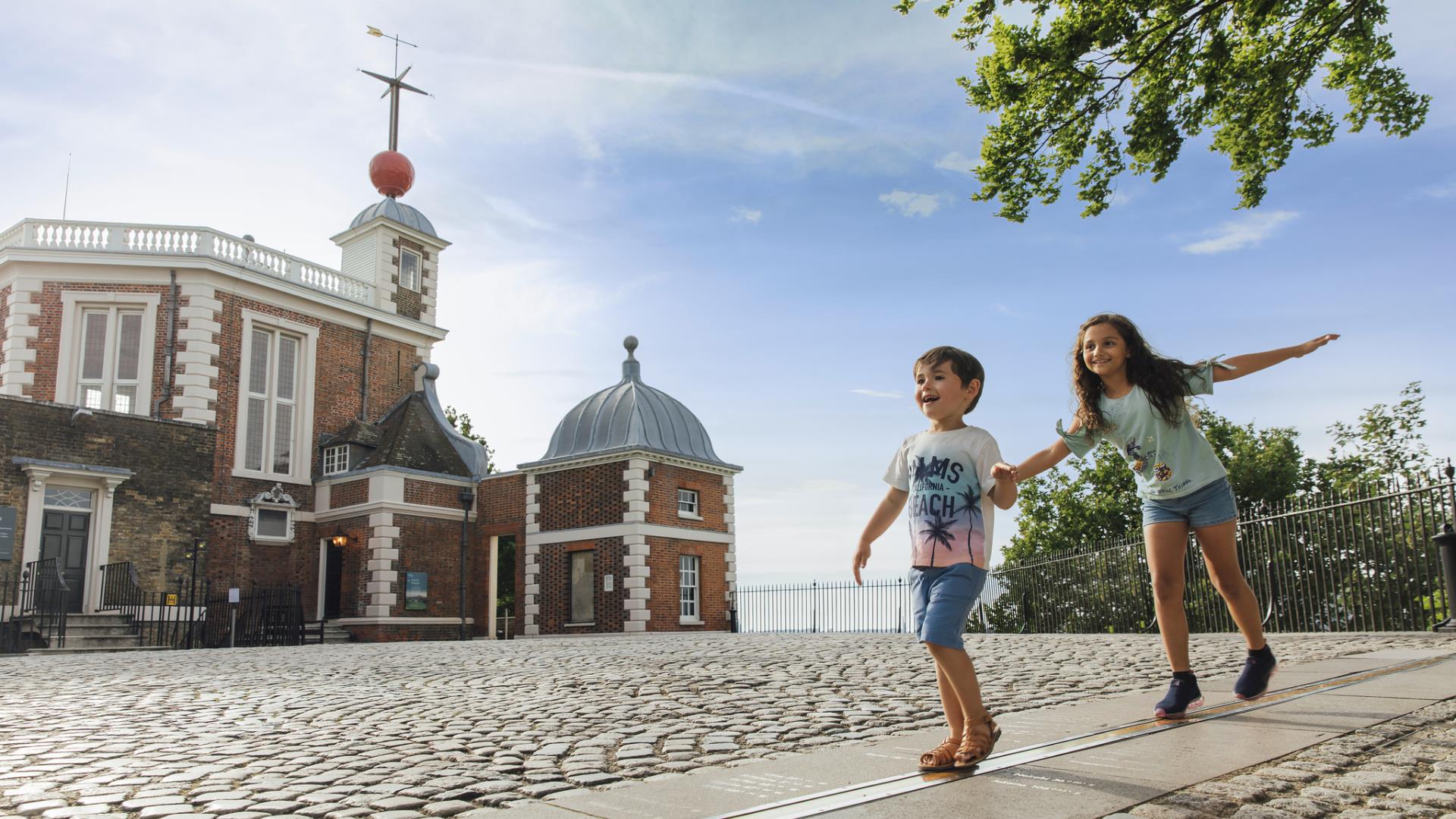
part of the Old Royal Naval College. Charles II also redesigned the park and commissioned Sir Christopher Wren to build the Royal Observatory, Britain’s oldest purpose-built scientific structure, now part of the National Maritime Museum.James II was often at Greenwich with his brother Charles and, according to the famous diarist Samuel Pepys, suggested creating a Royal Naval Hospital. This was later established by Mary II, who commissioned Wren to design the Royal Hospital for Seamen in 1692-3. Now known as the Old Royal Naval College, it was completed in 1751 during the reign of George II.
More Royal Connections
George IV donated nearly 40 paintings (including Turner’s only Royal commission) to create the Naval Gallery of Greenwich Hospital in the Painted Hall in 1824. This was Britain’s first public national historical art collection and William IV, the ‘Sailor King’ made further donations, as did Queen Adelaide.Prince Albert personally paid £150 for Nelson’s Trafalgar coat for the Naval Gallery, while Queen Mary presented many items including objects from her own Nelson collection.
Recent Royal Connections
As Princess Elizabeth, HM The Queen was present when her father, George VI, officially opened the National Maritime Museum on 27 April 1937. She and HRH The Duke of Edinburgh made their first joint visit to Greenwich in 1948 – the year he became Trustee of the National Maritime Museum. They have since opened or visited many museum projects, including major national anniversary events such as the Royal Observatory tercentenary and Armada 400. The Duke of Edinburgh is also a Patron of the Cutty Sark. His support was crucial in achieving the original restoration of the ship at Greenwich and he remains supportive of the current restoration project, which will be completed in April 2012. Not long to wait...