A World Heritage Site
The ensemble of buildings at Greenwich and their landscape setting, including the Royal Park are a potent architectural symbol of English artistic, scientific and other institutional endeavour, notably from the 17th to late 19th centuries. The Queen’s House by Inigo Jones was the first Palladian building in England, while the Old Royal Naval College designed principally by Sir Christopher Wren and Nicholas Hawksmoor, is a confident expression of the ‘English Baroque’ style .
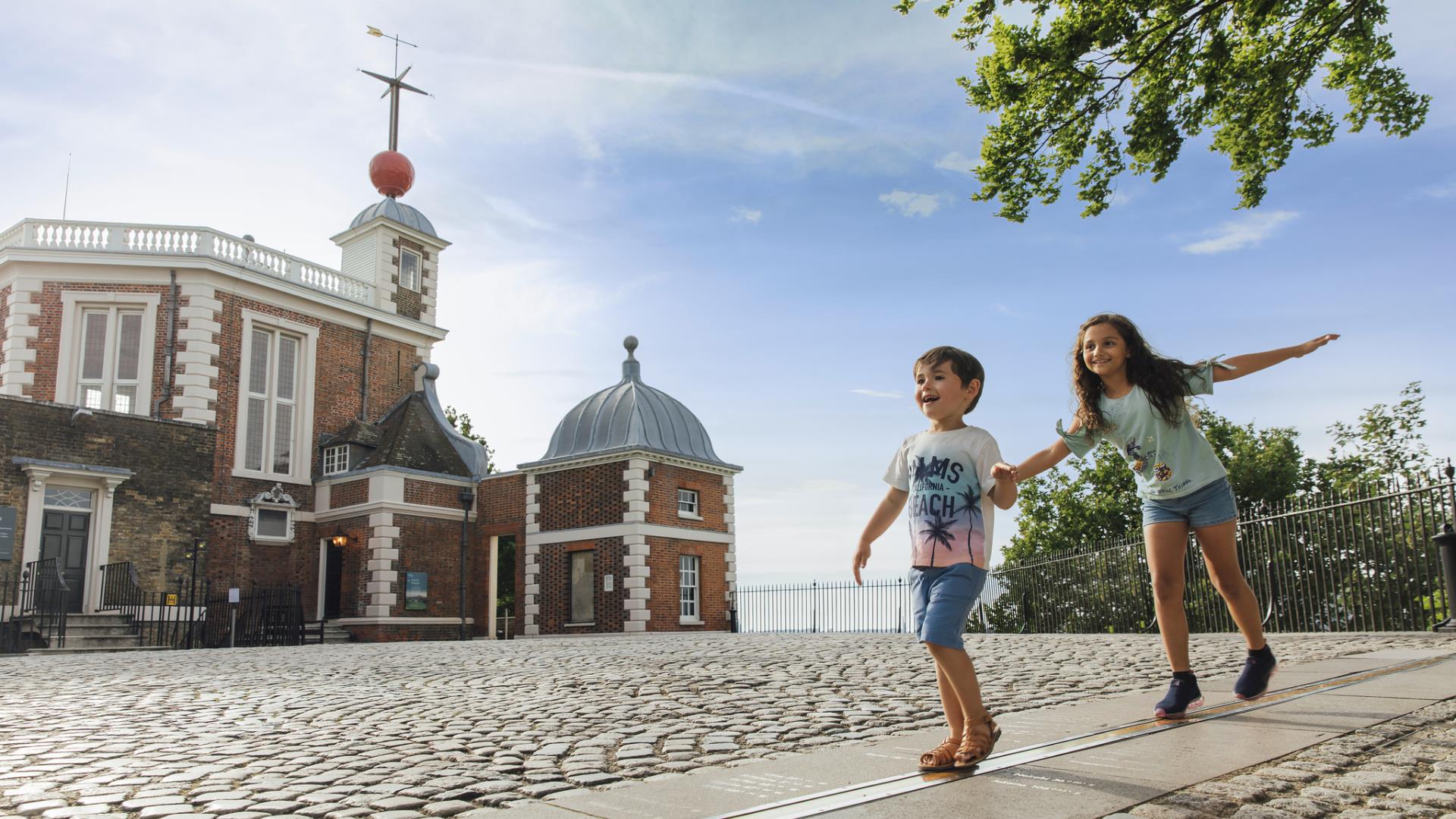
Greenwich Park, as re-planned to a design attributed to Andre Le Notre in the 1660s, surrounds the Royal Observatory which was the first purpose-designed scientific building in England. It was for over 250 years the national centre for research into positional astronomy, time-keeping and early Solar and magnetic astronomy. Its navigational and temporal role led to the Greenwich Meridian ( Longitude 0°) being agreed as Prime Meridian of the World in 1884.
Having held a former royal palace from the 15th century to around 1670, of which the Queen’s House is the last standing building) the Site and its buildings have evolved through many changing roles. The Royal Hospital for Seamen was established(1696 -1869) , its associated school (c 1712-1933), the Royal Naval College (1872– 1998), the former Dreadnought Seamen’s Hospital (established ashore from 1870 to the 1980s), and the National Maritime Museum (since 1937).
The physical and institutional development of ‘historic Greenwich’ is inseparable from key periods of Britain’s early modern history, British maritime power (naval and mercantile), related science, welfare, education and culture from the 17th century on. That role continues today in the broadest sense with all the major WHS partners including Greenwich Hospital (the historic charity, which remains primary freeholder under the Crown) committed in principle to continuing appropriate enhancement of the overall Site.
Maritime Greenwich comprises the historic town centre, Royal Park and related institutional buildings, and was inscribed by the World Heritage Convention in 1997. Maritime Greenwich has joined a unique club of the most important and natural places on earth - special places which people are encouraged to visit and explore now and for generations to come.
Follow the link below to find out more about Greenwich’s magnificent architecture and the part that has had to play in its inscription as a World Heritage Site.
Greenwich Architecture
Greenwich is renowned internationally for its magnificent architecture. Highlights include the National Maritime Museum, the Painted Hall and Chapel of the Old Royal Naval College, the Queen's House, the Royal Observatory, St Alfege Church, Trafalgar Tavern and the Fan Museum.
Greenwich History
Greenwich has played a key role in the story of Britain 's sea power for over 400 years and today its museums celebrate its maritime history. These attributes, combined with close links to England 's Tudor and Stuart sovereigns, give Greenwich an unrivalled symbolic identity.
Guided Walks in Greenwich
Greenwich Tour Guides run guided walks in the Maritime Greenwich World Heritage Site. The walks start from Greenwich Tourist Information Centre every day at 12.15pm and 2.15pm and cost £7.00. Concessions are £6.00 and under 16s go free. Find out more about these fascinating Guided Walks here.
Useful links
Greenwich Visitor Map

Download your Greenwich Visitor map here.