Famous Faces of Greenwich
Thomas Tallis
Composer (1505-1585)
His musical career spanned all the religious upheavals of 16th century England. After working as organist at Wlatham Abbey, he was pensioned off at the Dissolution (1539) and then appointed to Henry VIII’s Chapel Royal. Through the years which followed, Tallis went from setting Latin texts to English, to Latin again and finally English tempered with Latin. His composition were as varied as the times in which he lived with simple anthems like ‘If you love me’, the grandeur of the 7-part Mass to the dark passions of ‘Lamentations’ and the complexity of the 40 part ‘Spem in Alium’. His influence was invaluable to the development and flowering of the golden age of Tuodr music under Elizabeth I.
Mary Tudor
Dowager Queen of France & Charles Brandon, Duke of Suffolk
A stained glass window commemorates the wedding of Princess Mary, sister of Henry VIII at Greenwich, having secretly married Charles Brandon in Paris after the death of her first husband, Louis XII of France. The ill-fated ship which sank off Portsmouth was named after her.
The Revd. John Flamsteed
Astronomer Royal (1646-1719)
He showed an early talent for practical astronomy and became the first Astronomer Royal. He was instrumental in persuading Charles II to construct an observatory at Greenwich to observe the positions of the stars in order to calculate the positions of ships at sea. He had to finance much of his work from his own pocket. A regular worshipper here for over 40 years, he wrote to the churchwardens complaining when no pew was allotted to him in the new church of 1714.
General James Wolfe
Soldier (1727-1759)
Schooled in Greenwich, Wolfe rose swiftly through the ranks and was a major by the age of 22. He saw service in the Highland Clearances and in Flanders before going to Canada. In 1759 he captured Quebec from the French commander, Montcalm. Both he and Montcalm died on the field of battle. Wolfe’s body was buried in the vault beneath the church. A painting of the Death of General Wolfe by the Royal Academician, William Penny is at the back of the church.
Henry Kelsey
Explorer (1667-1724)
Buried in St Alfege’s in an unmarked grave, Kelsey was apprenticed to the Hudson’s Bay Company in 1684 and was sent to York Fort on the Hudson Bay. It was the first of twelve trips he made across the Atlantic. In 1690-91 he made a trip across the Canadian Plains and became the first European to see the prairies of Saskatchewan and incidentally the bison.
Sir John Julius Angerstein
Financier and patron of the arts (1753-1823)
Born in St Petersburg, he emigrated to England at 15 and became a Lloyd’s underwriter at 21. He was the main inspiration behind Lloyd’s and financial advisor to Prime Minister William Pitt the Younger. He was a distinguished patron of the arts and his collection of paintings formed the core of the National Gallery. He built Woodlands in Mycenae Road now the Greenwich Local History Library (Tablet in western lobby)
Samuel Enderby
Merchant (1755-1829)
Member of a Greenwich trading family which dealt in tea (their ships were the focus of the Boston Tea Party), whale oil and convicts. The Enderbys financed three expeditions to Antarctica. Sir John Biscoe the explorer named part of the continent Enderby Land. The grandson of an Enderby captain from Boston was Herman Melville, author of ‘Moby Dick’. The book features the ship ‘Samuel Enderby’ and Melville pays tribute to the Enderby family. (Tablet east end of north aisle). The Enderbys went on to manufacture cable on the Greenwich peninsula.
General Sir Charles Gordon
(1833-1885)
Born in Woolwich, grandson of Samuel Enderby, he was baptised in St Alfege in 1833. As well as crushing the Taipeng rebellion in China, he sustained a great ministry for the relief of poverty and the suppression of slavery. He became Governor of the Sudan. In 1885 he was murdered at the siege of Khartoum by the troops of the Mahdi. (Stained glass window in north aisle).
Sir George Biddell Airy
Astronomer (1801-1885)
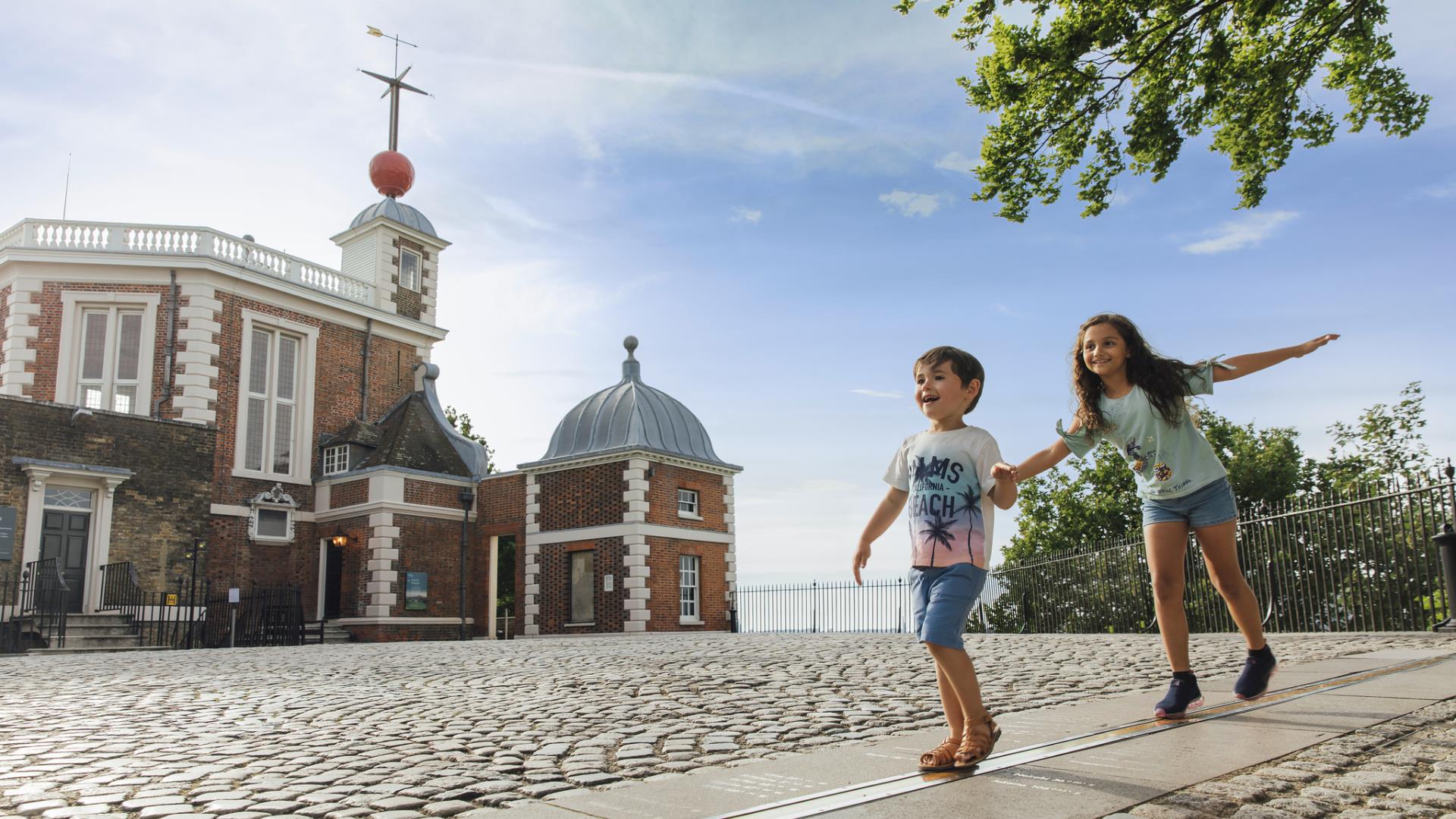
While Astronomer Royal he re-equipped Greenwich Observatory with new instruments, some of his own devising, including the Airy Transit Circle by which the Greenwich Meridian was finally defined. It was internationally recognised in 1884. (Tablet in the western lobby)
Famous Faces of Greenwich
Follow the link below to find out more about the famous faces of Greenwich associated with St Alfege church.


Maritime Greenwich World Heritage Site